
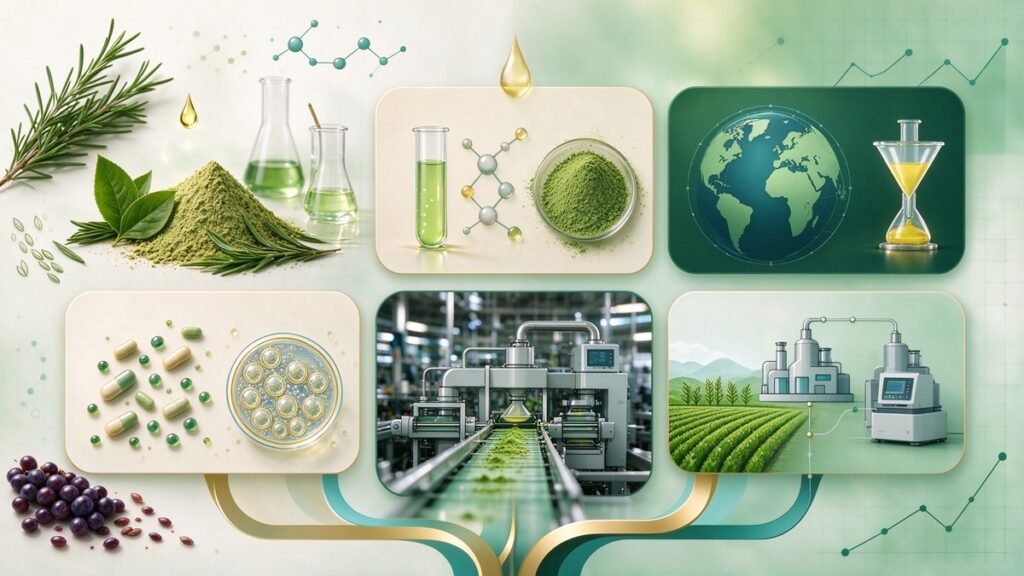
The global food additive sector is undergoing profound transformation, driven by clean-label demand, regulatory tightening, consumer preference for natural alternatives, and advances in food processing technology. Synthetic additives are gradually being replaced or optimized by natural, plant-derived, fermented and bio-based solutions.
1. Clean label & natural alternatives remain the primary trend
Consumers and food manufacturers keep rejecting artificial colours, artificial preservatives and synthetic flavour enhancers. Natural colours, natural antioxidants, natural preservatives and plant-based thickeners are the fastest-growing subcategories. Plant extracts serve as one of the most important sources for clean-label additives: rosemary extract, green tea extract and grape seed extract are widely used natural antioxidants to extend shelf life of meat, bakery, oil and snack products. Anthocyanins, beet red, paprika extract are mainstream natural colourants. Formulators prefer multi-functional additives. An ingredient with antioxidant + colour protection or antibacterial activity reduces the total number of additives on the ingredient list, which helps simplify labels.
2. Safety & regulatory updates worldwide
Regulators across major markets are updating standards for food additives, with stricter risk assessment, usage limit and impurity control.
- EU: EFSA continues to re-evaluate permitted food additives, revising acceptable daily intake (ADI) values for many substances. New specifications for contaminants, heavy metals and process by-products are released. Novel Food approval is mandatory for newly developed natural additives or fermented ingredients.
- USA: FDA strengthens GRAS notification review. Imported food additives are subject to more rigorous sampling and testing for adulteration, microbial contamination and residual solvents.
- China: GB 2760 is continuously updated. New food additive varieties and expanded usage scopes are announced regularly; inspection on production consistency, label declaration and illegal over-range usage is strengthened. Global buyers now routinely require COA, TDS, safety assessment reports, allergen statements, heavy metal & pesticide test data, HALAL, Kosher and FSSC22000 certificates.
3. Technology innovation direction
- Fermentation-derived additives are booming: microbial fermentation can produce natural flavours, sweeteners, preservatives and functional additives with high purity and stable supply, less affected by climate and crop harvest cycles.
- Microencapsulation technology is widely adopted. Encapsulated antioxidants, flavours and acidulants avoid loss during high-temperature extrusion, baking and sterilization, improving stability and controlled release performance.
- Intelligent detection: rapid detection, LC-MS and fingerprint identification help identify adulteration, mixing synthetic pigments into natural plant colourants is one of the most common fraud risks in this segment.
4. Demand growth areas
- Plant-based food, plant meat and alternative dairy: require matching natural colour, flavour masking systems and antioxidant stabilizers.
- Functional beverages, low-sugar & zero-sugar food: natural sweeteners, bitter blockers and flavour modulators are in high demand.
- Pet food: pet food additives follow human food clean-label trends, natural antioxidants and palatability enhancers are hot-selling.
- Frozen food and ready-to-eat meals: demand stable natural preservative systems to inhibit lipid oxidation.
5. Supply chain & competition landscape
Raw material price volatility of agricultural sources is still a major challenge for natural food additives. Many buyers sign long-term sourcing contracts with integrated manufacturers who own planting bases and extraction workshops. The market is divided clearly: low-price conventional additives face fierce competition. Natural, standardized, multi-functional additives with complete supporting documents and application technical support enjoy higher profit margins. Suppliers that can provide formulation solution service rather than just selling powder are more competitive.
Meta Title:Global Food Additive Industry Update 2026 | Clean Label & Natural Additive Trends Meta Description:Latest global trends of food additives in 2026, covering clean label natural antioxidants, plant colourants, fermentation ingredients, regulatory changes and application in plant-based food.